_edi.jpg)


International Conference
The Invisible Middle: Understanding Online Extremism in Middle-Aged Adults in Europe

On 29 January 2026, Inclusive Europe hosted the SMIDGE International Conference “The Invisible Middle: Understanding Online Extremism in Middle-Aged Adults in Europe” at the NH Brussels EU Berlaymont. Bringing together policymakers, researchers, journalists, security experts and civil society representatives, the event created a much-needed space to examine the role of middle-aged adults in today’s online extremism ecosystem - a demographic that remains under-researched despite being highly active and influential online.
Keynote: The “Sandwich Generation” and Digital Vulnerability
In the keynote, Dr. Sara Wilford, who is an associate professor at De Montfort University and also the founder and co-leader of the project, highlighted the specific position of middle-aged adults, often described as the “sandwich generation”, who may feel undervalued at work, pressured by rapid social and technological change, and nostalgic for a perceived past stability. While everyone is vulnerable to disinformation, SMIDGE seeks to understand why this group may be particularly susceptible to narratives built around nostalgia, outrage and perceived loss. Unlike legacy media, social media and online news are not bound by the same legal accuracy standards, creating an environment where emotionally charged misinformation can thrive.
Panel I: Presentation of SMIDGE Findings
The first panel presented core findings from the SMIDGE project. Prof. Giovanni Ziccardi from the Milan University addressed the legal dimension, asking how law can effectively respond to conspiracy theories and disinformation without undermining fundamental rights. He argued for a shift from repression to risk governance, stressing that conspiracy theories are not merely a content problem but a governance problem. Media literacy efforts, he suggested, must move beyond a youth-centric focus toward lifelong epistemic resilience.
Dr. Line Nybro Petersen from the University of Copenhagen explored the concept of “hybridisation,” describing how extremist dynamics involve not only the blending of ideologies but also aesthetics and digital practices. She outlined four dimensions of hybridity - content, technological, aesthetic and participatory practices - and identified key features of “HYPE spaces,” where influential actors, collaborative narrative-building, ambiguity and weaponised irony interact.
Dr. Kalypso Iordanou and Dr. Vasiliki Christodoulou from UCLan Cyprus presented survey and focus group findings on middle-aged adults’ social media engagement. Their research shows that increased time spent on social media correlates with lower ability to distinguish disinformation from accurate information. On immigration-related issues in particular, misinformation discernment levels were significantly lower.
Christian Gulas from FAS Research introduced the idea of a “surplus of meaning,” where an overabundance of narratives fuels digital polarisation. He explained how emotionally charged content spreads more effectively online, particularly when framed as violations of core moral values. Moral framing, he noted, activates specific emotions and reinforces divisions.
Fabrizio Boldrini from FVM presented the SMIDGE MOOC platform, which offers free expert-led courses on digital literacy, ethics in journalism, cognitive biases, media ecosystems and online conspiracy theories. The platform aims to equip journalists with practical tools and greater awareness in shaping media narratives responsibly.
Panel II: Media and Cultural Perspectives
The second panel shifted the focus to media, storytelling and cultural production. Jason Lee from De Montfort University introduced the SMIDGE documentary, Middle Rage – Social Media and the War on Democracy, and reflected on the process behind its creation. Following the screening, filmmakers Sian Hamlett and Mitchell Harris, who developed the documentary together with Jason, joined him for a discussion on how visual storytelling can both reinforce and challenge extremist narratives.
Panel III: Common Challenges and Best Practices
Panel III brought together representatives of EU-funded projects to exchange approaches and lessons learned. Dr.
Line Nybro Petersen presented research on networked conspiracy communities, using the “Uncle Shrimp” case, an online harassment campaign involving a Danish children’s TV character, to illustrate how participatory practices blur the boundaries between entertainment and ideology. She highlighted the challenges of prevention, including platform incentive structures, media amplification dilemmas, policy communication gaps and the need for greater user awareness.
Dr. Sandra Obradovic and Dr. Joana Ricarte introduced OppAttune’s work on “everyday extremism.” Rather than focusing on who becomes extremist, the project examines the conditions that enable extremist ideas to spread. Through tools and measurement scales, OppAttune seeks to strengthen democratic skills and move from a purely formal understanding of democracy toward a “living democracy.”
Louise Burté presented the ARENAS project, which analyses how extremist narratives circulate and develops remediation strategies, particularly for young audiences. Workshops implemented in schools across several European countries show measurable improvements in students’ ethical awareness, empathy and critical thinking. A dedicated platform for high school students is now under development.
Seyma Celem introduced the ENCODE project, which explores how emotions drive political decision-making and public discourse. Moving beyond the idea that politics is purely rational, ENCODE examines how emotional expression - online and offline - shapes democratic engagement. Through sentiment analysis, cross-country research and citizen innovation labs, the project aims to develop evidence-based tools and foster more constructive, emotionally inclusive narratives.
Panel IV: From Evidence to Action
The final panel translated research insights into policy and practice. Anna De Marchi from DG CONNECT outlined the European Commission’s efforts to strengthen platform accountability under the Digital Services Act (DSA). Very large platforms are required to assess and mitigate systemic risks, including disinformation and polarisation, with the Commission empowered to open investigations where necessary. Broader initiatives such as the European Democracy Shield and enhanced data access provisions aim to reinforce transparency, resilience and coordinated responses to emerging digital threats.
Juliane von Reppert-Bismarck from Lie Detectors addressed both the demand and supply sides of disinformation. By partnering journalists with schools, Lie Detectors promotes media literacy and critical thinking among students and teachers. She highlighted generational gaps in digital spaces and called for stronger investment in scalable education initiatives and teacher training to build long-term resilience.
Becky Slack from Agenda emphasised the importance of communication strategies. Fact-checking alone, she argued, has limited impact in emotionally charged environments. Complementary approaches, such as pre-bunking, reframing, trust-building language and working with credible non-political messengers, are essential. Offline contexts also matter: online extremism often flourishes where journalism is weak and community ties are fragile.
Saman Nazari from Alliance4Europe presented a shift from monitoring influence operations to actively disrupting them. Their framework, structured around preparation, disruption and mitigation, combines documentation, analytical tools, regulatory engagement and collaboration with platforms, law enforcement and civil society. Through the Counter Disinformation Network (CDN), Alliance4Europe connects journalists, researchers and practitioners across Europe to detect and counter coordinated information manipulation, aiming to strengthen coordination across local, national and EU levels.
Conclusion
The conference underscored that middle-aged adults are neither passive bystanders nor marginal actors in the digital sphere. They are central participants in contemporary information ecosystems - as consumers, sharers, professionals and community members. Addressing online extremism therefore requires a shift toward lifelong digital resilience, cross-sector collaboration and emotionally aware strategies.
By connecting research findings, cultural insights and policy discussions, The Invisible Middle contributed to a more nuanced understanding of online extremism and strengthened dialogue on practical, evidence-based responses.
Access the full conference programme here.
Access the conference recordings here.
Keynote Speech

Dr Sara Wilford is Associate Professor and Interim Co-Director of the Centre for Computing and Social Responsibility at De Montfort University, Leicester, UK. Having initiated and designed the SMIDGE Project, she currently co-leads the initiative. Her background is multi-disciplinary with expertise in computer ethics, surveillance, privacy, responsible research and innovation and public policy.
Sara Wilford
Panel I: Presentation of SMIDGE Findings

Line Nybro Petersen
Dr. Line Nybro Petersen is Associate Professor in Media Studies at the University of Copenhagen. Her research spans media and cultural studies with a focus on social media, conspiracy theories, extremism, and platform studies, and she is co-leads the SMIDGE Project.

Vasiliki Christodoulou
Dr. Vasiliki Christodoulou is an Assistant Professor in Psychology and Course Leader of the MSc Forensic Psychology programme at UCLan Cyprus. Her research focuses on Acceptance and Commitment Therapy, mindfulness-based interventions, and psychological wellbeing across the lifespan.

Kalypso Iordanou
Dr. Kalypso Iordanou is a Professor of Psychology at UCLan Cyprus and Director of the Thinking Lab. She specialises in argumentation, epistemic belief development, cognition and discourse, and leads researches on cognition and digital society.

Fabrizio Boldrini
Fabrizio Boldrini is the Director General of the Fondazione Hallgarten-Franchetti Centro Studi Villa Montesca. He has authored books on emotional intelligence and critical thinking in school curricula and has extensive experience leading European-level educational initiatives and research projects.

Christian Gulas
Christian Gulas is Partner and Chief Scientist at FAS Research (Vienna, Austria). He is a sociologist and data scientist whose work focuses on network analysis, digital discourse, and the emotional and moral dynamics of online communication. In the SMIDGE project, he contributes research on moral framing, sentiment, and the spread of polarizing online content.

Giovanni Ziccardi
Giovanni Ziccardi is Professor of Legal Informatics at the University of Milan. He holds a PhD in Legal Informatics and has extensive expertise in cybercrime, digital evidence, cybersecurity, artificial intelligence, and the legal and ethical implications of emerging technologies.
Panel II: Media and Cultural Perspectives on Online Extremism

Professor Jason Lee
Professor Jason Lee is Professor of Film, Media and Culture at De Montfort University. He is also Head of Partnerships in the Leicester Media School and a British Academy Innovation Fellow, known for his interdisciplinary work on media, culture and social issues, and as the author/editor of numerous books.

Sian Hamlett
Sian Hamlett – Director & Founder, Hamlett Films
Sian Hamlett is the Founder and Managing Director of Hamlett Films, an award-winning UK production company specialising in educational and socially impactful films and interactive content. She has produced and directed over 500 films.

Mitchell Harris
Mitchell is an award-winning editor whose creative flair, technical precision, and warmth make him indispensable. He blends narrative instinct with cutting-edge post tools, motion design, and immersive storytelling techniques.
Panel III: Common Challenges and Best Practices from Related Projects

Ludmila Malai
Ludmila Malai is an EU Project Manager with extensive experience across AMIF, CERV, ISF and Horizon Europe projects. She holds degrees in Economics, Politics, Diplomacy, International Law and Security Studies, and has significant expertise in writing and coordinating EU-funded projects.
.jpg)
Joana Ricarte
Dr. Joana Ricarte is an Assistant Researcher at the University of Coimbra's Center for Interdisciplinary Studies (CEIS20) where she leads the Portuguese team at OppAttune project. She is a historian and political scientist with expertise on peace, identity and conflict studies, everyday extremism, ontological (in)security and policymaking. She has extensive experience on qualitative methods, participatory action research and gamification.

Line Nybro Petersen
Dr. Line Nybro Petersen is Associate Professor in Media Studies at the University of Copenhagen. Her research spans media and cultural studies with a focus on social media, conspiracy theories, extremism, and platform studies, and she is leads the SMIDGE Project.

Louise Burté
Louise is a Ph.D. student working for the WP5 of the ARENAS project, which focuses on mediating and remediating extremist narratives. She is interested in issues of violence and extremism, particularly in identifying and preventing them through an interdisciplinary approach. Previously, her research focused on analyzing forms of cyberviolence, whether overt or covert, from linguistic and sociological perspectives. For her thesis, she is analyzing the impact of recent pedagogical interventions with high school students from different European countries.
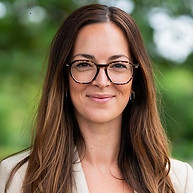
Sandra Obradovic
Sandra Obradovic is Assistant Professor in Social Psychology in the Department of Psychological and Behavioural Science at The London School of Economics (UK) and a researcher at OppAttune. Her research focuses on the sociocultural foundations of politics.

Seyma Celem
Seyma Celem is a Project Manager for the ENCODE project. She specializes in advocacy, democratic resilience and representation, preventing violent extremism (PVE), online radicalisation, and youth empowerment. She has coordinated and contributed to multiple EU-funded projects and academic initiatives across policy, research, and civil society domains.
She holds a Master’s degree in Political Science and is currently in the preparation phase of her PhD.
Panel IV: Policy Discussion – From Evidence to Action

Mentor Vrajolli
Mentor Vrajolli is the Executive Director of the Kosovar Centre for Security Studies (KCSS), a position he has held since January 2019. He has been part of KCSS since 2008, initially joining as a Researcher, and later serving as Senior Researcher and Secretary from 2011 before assuming his current leadership role.

Juliane von Reppert-Bismarck
Juliane von Reppert-Bismarck is the Founder and Executive Director of Lie Detectors, an award-winning European news-literacy organization that partners journalists with schools to combat disinformation and polarization. Juliane is a former award-winning journalist with two decades of experience at outlets including The Wall Street Journal, Reuters, and Newsweek, she has been recognized for her work as an EU “Local Hero.”
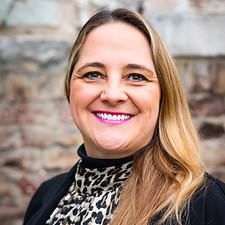
Becky Slack
Becky Slack is
co-director of Agenda.
She is a media and communications specialist with expertise in journalism, disinformation and social impact narratives.

Saman Nazari
Saman Nazari is Lead Researcher at Alliance4Europe. His work focuses on democracy, information manipulation and the impact of digital technologies on political processes.

Anna De Marchi
Anna De Marchi works at DG CONNECT, the European Commission’s Directorate-General for Communications Networks, Content and Technology. Her work supports EU digital policy and technology governance initiatives.